Closed-Lock, Open-Lock TMJ and acute malocclusion
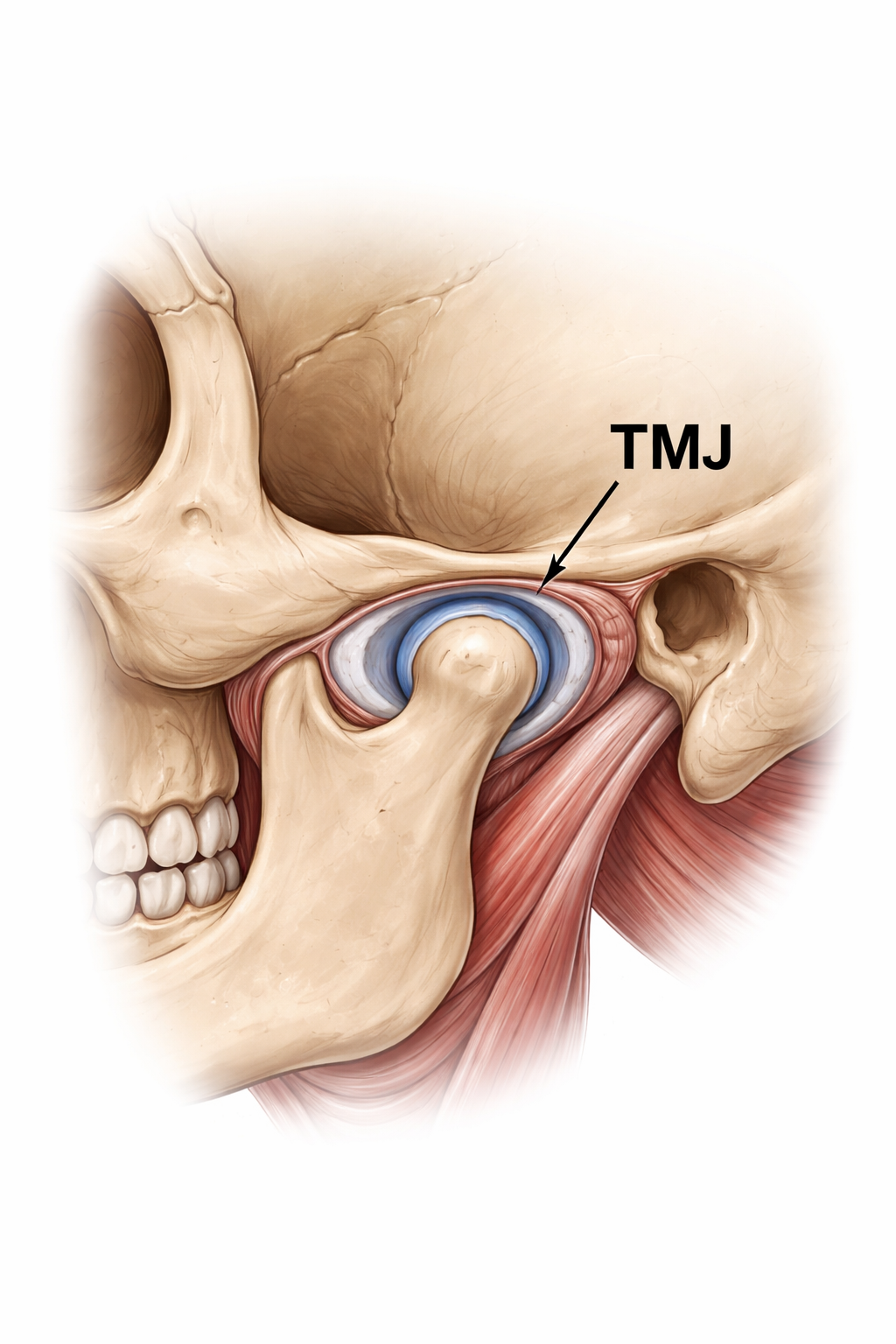
TMJ = Temporomandibular Joint
Your TMJ is the joint connecting your jaw to your skull. It lets you speak, chew, yawn, and move your jaw smoothly. Sometimes this joint can stop moving properly, leading to “locking.”
What Is Jaw Locking?
Jaw locking happens when the joint or the disc inside the joint stops moving normally. There are two main types:
Closed-lock: the jaw is stuck and cannot open fully.
Open-lock: the jaw becomes stuck in a wide-open position and is difficult to close. It is impossible to swallow with an open lock.
Both conditions relate to how the jaw joint’s disc and muscles function.
Closed-Lock TMJ (Disc Displacement Without Reduction)
What Is It?
Closed-lock occurs when the small disc inside your TMJ moves out of place and does not return to its normal position when you open your mouth.
This limits how wide you can open and may be painful.
Common Symptoms
Reduced ability to open the mouth (often less than 25–30 mm)
Pain in the jaw joint or surrounding muscles
Jaw feels “stuck” when trying to open
Difficulty chewing
Sometimes a history of clicking that suddenly stopped
Why Does It Happen?
Disc displacement
Inflammation in the joint
Spasm of jaw-opening muscles
Often triggered by chewing something hard, yawning widely, clenching, or stress-related muscle tension
Treatment
Most cases improve with conservative care:
Physiotherapy to restore mobility and relax muscles
Gentle jaw exercises to improve opening
Anti-inflammatory medications (as advised by your clinician)
Heat or warm packs to reduce muscle tension
Soft diet for 1–2 weeks
Jaw posture training (avoiding wide opening or clenching)
In more persistent cases, your clinician may consider:
TMJ injection (e.g., corticosteroids)
Arthrocentesis (a flushing procedure to free the disc with a oral maxillofacial surgeon)
Open-Lock TMJ (TMJ Subluxation or Dislocation)
What Is It?
Open-lock happens when the jaw opens too far and the joint becomes stuck in front of the joint socket.
The mouth becomes held open and is difficult or impossible to close without assistance.
Common Symptoms
Jaw stuck in an open or wide-open position
Inability to close the mouth
Pain or pressure in the front of the ear
Anxiety or distress because the jaw won’t move normally
Popping sensation when the jaw finally returns
Why Does It Happen?
Excessive mouth opening (e.g., yawning, dental procedures)
Lax or loose ligaments
Shallow joint shape
Hypermobility conditions
Previous history of dislocation
Treatment
Immediate care focuses on helping the jaw return to its normal position.
Depending on severity:
Manual reduction (performed by a trained clinician)
Muscle relaxation techniques, breathing control
Short-term soft diet and avoiding wide opening
Supportive physiotherapy to strengthen the joint and improve control
Stabilisation techniques for those with recurrent dislocations
Acute Malocclusion
An acute malocclusion happens when the jaw tightens or locks and does not allow the teeth to get into their normal biting position. It can be a result of both muscular or joint problems.
If a bite no longer feels normal and this has happened very quickly, it is worth checking whether it is the jaw causing the accusal change before trying any permanent irreversible options like orthodontics or tooth adjustments. This is something we can assess for within a consult and rule the TMJ in or out. If the TMJ is a source then we would use manual therapy or exercise techniques to improve the quality of movement at the joint and hopefully reestablish bite.
How Physiotherapy Helps
Physiotherapists with TMJ training help by:
Restoring normal jaw movement
Reducing pain and muscle tension
Teaching exercises to improve disc mechanics
Guiding habits such as posture, breathing, and reducing clenching
Helping prevent future locking episodes
Self-Care Tips for Both Types of Locking and malocclusion
Avoid chewing gum or hard foods
Use heat for muscle tightness
Avoid extreme opening (big yawns, biting into large foods)
Practise relaxed jaw posture: “lips together, teeth apart”
Manage stress and muscle tension
Follow your prescribed exercises consistently